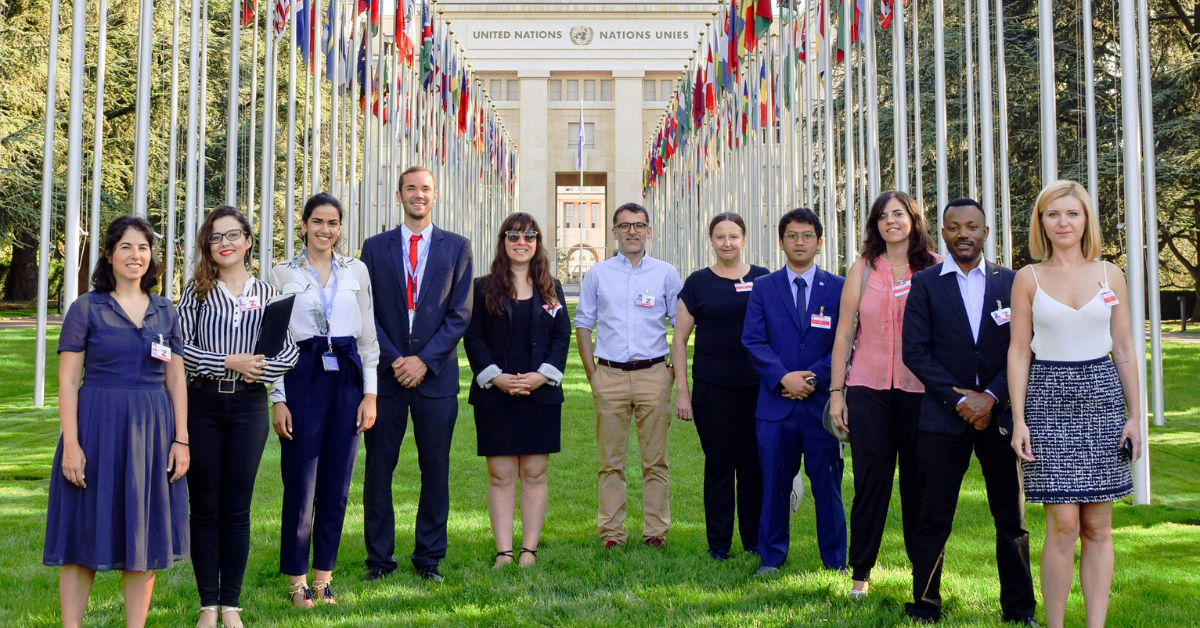

The global security landscape of 2026 is defined by rapid shifts in illicit trade, evolving cyber-threats, and the complex intersection of organized crime and regional instability. For professionals seeking to influence these global narratives, the United Nations Office on Drugs and Crime (UNODC) has opened a prestigious opportunity for an Associate Research Officer (Programme Development and Coordination) at the P-2 level. Located in the vibrant hub of Dakar, Senegal, this position is not merely a desk-bound analytical role; it is a mission-critical appointment that places researchers at the heart of the Sahel and West African corridors.
This position matters now more than ever because West and Central Africa are currently navigating a “polycrisis” involving drug trafficking, environmental crime, and maritime insecurity. The UNODC Regional Office for West and Central Africa (ROSEN) is the primary vehicle through which the United Nations delivers technical assistance to 22 countries. By joining the Research and Awareness team in 2026, the successful candidate will contribute to the Strategic Vision for Africa 2030, turning raw field data into high-level policy recommendations that protect vulnerable populations and strengthen the rule of law.
What makes this P-2 position stand out is its unique blend of technical research and field-based operations. Unlike traditional academic roles, this Associate Research Officer will be expected to conduct missions into remote border areas—places where the data is often thin and the risks are high. This is a rare gateway for early-to-mid-career professionals to gain “boots-on-the-ground” experience while operating within the sophisticated framework of the UN’s professional category.
ALSO CHECK : Secure a Tax-Free Editorial Role with the International Maritime Organization in 2026
Beyond the Data: Join UNODC in Dakar to Map the Frontiers of Global Security and Counter-Trafficking in 2026
Table of Contents
Background & Job Description
The United Nations Office on Drugs and Crime (UNODC) is a global leader in the fight against illicit drugs and international crime. Established to support Member States in implementing international treaties, UNODC operates across five main pillars: organized crime, corruption, terrorism prevention, criminal justice, and health/drug prevention. The Regional Office for West and Central Africa (ROSEN), based in Dakar, serves as the operational nerve center for these efforts across a region that is critical to global stability.
The Associate Research Officer will function within the Division for Operations (DO), specifically embedded in the Research and Awareness team. This team is tasked with “illuminating the shadows”—producing the empirical evidence required to understand how criminal networks operate across borders. In 2026, the department is focused on enhancing the granularity of its data, moving beyond national statistics to look at localized trends in trafficking and human smuggling.
The role’s primary purpose is to support the development and coordination of research programs that inform UNODC’s regional interventions. When a country in the Sahel seeks to strengthen its border controls, they rely on the data produced by this office to identify where the most significant leakages occur. Consequently, the impact of this role extends from the high-level briefings in New York and Vienna down to the training of local border guards in the remote regions of the Lake Chad Basin or the Gulf of Guinea.
Key Responsibilities
The Associate Research Officer (Programme Development and Coordination) carries a portfolio that balances rigorous data science with diplomatic coordination. The organization is seeking an individual who can navigate the following key responsibilities:
- Field-Based Data Collection: Leading and participating in frequent research missions across West and Central Africa. This includes traveling to remote and often high-risk border areas to conduct interviews, oversee surveys, and verify localized crime trends.
- Quantitative and Qualitative Analysis: Identifying emerging trends in illicit trafficking (drugs, firearms, medical products, and natural resources). The officer must be able to synthesize vast datasets to provide a clear picture of the “criminal economy.”
- Drafting Flagship Reports: Contributing to the development of major UNODC publications, including the World Drug Report and regional threat assessments. This requires a high standard of drafting in both English and French.
- Data Visualization: Developing sophisticated visual tools—such as maps, charts, and infographics—to make complex research findings accessible to donors, Member States, and the general public.
- Programme Coordination: Assisting in the design and implementation of research-led projects. This involves coordinating with national authorities, NGOs, and other UN agencies to ensure that research activities are aligned with regional needs.
- Resource Mobilization Support: Preparing technical briefings and data-heavy presentations for donor meetings, helping to secure the funding necessary to continue UNODC’s mission in the region.
- Monitoring and Evaluation: Ensuring that research outcomes are integrated into the broader monitoring and evaluation framework of the ROSEN office, measuring the “real-world” impact of UNODC’s technical assistance.
Qualifications
The P-2 level is the “gateway” to the UN Professional category. As such, the selection criteria are designed to identify individuals with high potential, academic rigor, and a resilient mindset.
Education & Certification
- Advanced University Degree: A Master’s degree in Political Science, Economics, Criminology, International Relations, Law, or a related social science field is mandatory.
- Alternative Pathway: A first-level university degree (Bachelor’s) in similar fields, combined with two additional years of qualifying professional experience, may be accepted in lieu of the Master’s degree.
- UN Exam Success: Candidates who have passed the United Nations Young Professionals Programme (YPP) or the Competitive Support Examination (G to P) are highly encouraged to apply, as these credentials are pre-vetted indicators of excellence within the UN system.
Experience
- Minimum Tenure: At least two years of progressively responsible experience in research, programme development, or coordination within the fields of drugs, crime, or social affairs.
- Technical Domain Expertise: Proven experience in handling large datasets and conducting field-level research is essential. The organization prioritizes candidates who have experience in the “Global South” or in post-conflict environments.
- Language Proficiency: Fluency in English and French is a strict requirement. Dakar is a Francophone station, but the regional reporting and global coordination occur primarily in English. Mastery of both allows the officer to bridge the gap between local field contacts and international headquarters.
- Technical Competencies:
- Data Analysis Tools: Proficiency in SPSS, Stata, R, or Python for statistical analysis.
- GIS Skills: Ability to use Geographic Information Systems (QGIS or ArcGIS) to map trafficking routes is considered a significant competitive advantage.
- Drafting: A demonstrated ability to produce clear, concise, and technically accurate reports for a diplomatic audience.
Why Apply for This Position
1. Unrivaled Field Exposure
Most research roles in the international sector are sedentary. This position is a significant departure from that norm. The Associate Research Officer will gain first-hand experience in some of the world’s most complex logistical environments. By traveling to remote border areas, you will develop a “ground-truth” understanding of security that cannot be replicated in a classroom or a headquarters office.
2. The “Dakar Advantage”
Dakar is widely considered one of the most attractive duty stations in Africa. As a “Family Duty Station” with a Hardship A rating, it offers a high quality of life, excellent international schools, and a thriving cultural scene. For a professional, this means you can tackle high-intensity, “hardship-style” work in the field while returning to a stable, comfortable base.
3. Career Acceleration at the P-2 Level
The P-2 grade is the “gold standard” for entering the UN system. Once inside, you have access to internal vacancies and the opportunity to move laterally or vertically across the UN Secretariat. This role, given its heavy emphasis on “Programme Development,” also prepares you for future roles in Project Management and Strategic Planning, broadening your career horizons beyond pure research.
4. Direct Impact on Global Safety
In 2026, the data you collect could be the catalyst for a new international treaty or a multi-million dollar intervention to stop the flow of falsified medicines. There is a profound sense of purpose in knowing that your spreadsheets and maps are actively being used to dismantle criminal networks and protect human rights.
Application Tips & Insights
To succeed in the UN’s Inspira recruitment system, candidates must be strategic. The system uses automated screening for keywords and competencies before a human ever sees your profile.
1. Mastering the “STAR” Method
During the application and subsequent interview, you will be evaluated on Core Competencies (Professionalism, Teamwork, Planning & Organizing). When describing your experience in the Personal History Profile (PHP), use the STAR method:
- Situation: Set the scene.
- Task: What was your specific responsibility?
- Action: What steps did you take? (Use “I,” not “we”).
- Result: What was the measurable outcome? (e.g., “Increased data reporting by 30%”).
2. The “Bilingual” Resume
Since the role requires English and French, ensure your application reflects this. If you have written reports in both languages, list the titles. If you have conducted interviews in French, highlight that. Do not simply check the “fluent” box; provide evidence of your bilingual professional capacity.
3. Emphasize “Field Resilience”
The job posting explicitly mentions travel to remote border areas. If you have ever worked in a developing country, a rural area, or a high-pressure environment (even if not in crime research), highlight it. The hiring managers need to know that you won’t just survive in a remote mission, but thrive and maintain your analytical focus.
4. Technical Portfolio
If the system allows for attachments, or if you are invited to a technical test, be prepared to showcase your Data Visualization skills. A candidate who can turn a spreadsheet into a heat map of trafficking routes will always outshine a candidate who only provides text.
Additional Information
- Salary and Benefits: As a P-2 position, the base salary is supplemented by a Post Adjustment for Dakar, which accounts for the local cost of living. Staff members also receive a comprehensive benefits package, including a UN pension, health insurance, and dependency allowances.
- Contract Duration: This is a Temporary Job Opening (TJO). While TJOs have a defined duration (often 364 days), they are frequently used by the UN to fill urgent needs, and successful incumbents often find themselves well-positioned for future fixed-term vacancies.
- Work Arrangement: This is an onsite position based in Dakar, Senegal, involving frequent regional travel.
- Application Deadline: February 25, 2026.
- Equal Opportunity: The United Nations is committed to achieving 50/50 gender balance in its staff. Female candidates are strongly encouraged to apply.
How to Apply
Applying for a UN professional role is a multi-step process that requires patience and precision.
- Create an Inspira Account: Visit inspira.un.org to register.
- Search Job Opening: Use the Job ID: 271881.
- Complete the Personal History Profile (PHP): This is your digital CV. Ensure there are no gaps in your employment history, as the system may flag incomplete profiles.
- Draft a Motivation Statement: This is your “Cover Letter.” Avoid generic language. Specifically address why you are the right fit for the Dakar ROSEN office and how your research background aligns with the 2026 security landscape.
- Submit Before the Deadline: The system strictly closes at 11:59 PM New York Time on February 25, 2026. It is highly recommended to submit at least 48 hours early to avoid technical glitches.
Frequently Asked Questions
Q1: Can I apply if I am not a citizen of a West African country? Yes. Professional (P) level roles in the UN are open to all nationalities. The UN strives for geographic diversity, so candidates from all Member States are encouraged to apply.
Q2: What is the difference between a “Temporary Job Opening” (TJO) and a “Fixed-Term Appointment” (FTA)? A TJO is typically used for a duration of less than a year to address immediate needs or project-based work. While it has an end date, it provides “internal” status for certain applications and is a premier way to gain the specific UN experience required for long-term FTA roles.
Q3: How much travel is actually involved? The posting indicates “frequent research missions.” In practical terms, this could mean spending 25% to 40% of your time away from Dakar, depending on the current project cycle and regional security conditions.
Q4: Is a PhD required for this role? No. A Master’s degree is the standard requirement for a P-2. While a PhD is respected, the UN values practical field experience and the ability to coordinate programmes as much as pure academic credentials.
Suggested Focus Keywords: UNODC jobs 2026, Associate Research Officer P2, UN jobs Dakar, United Nations ROSEN vacancies, West Africa security research careers, organized crime data analyst UN, P-2 level UN requirements, UNODC research missions, Inspira application tips, Dakar international careers.